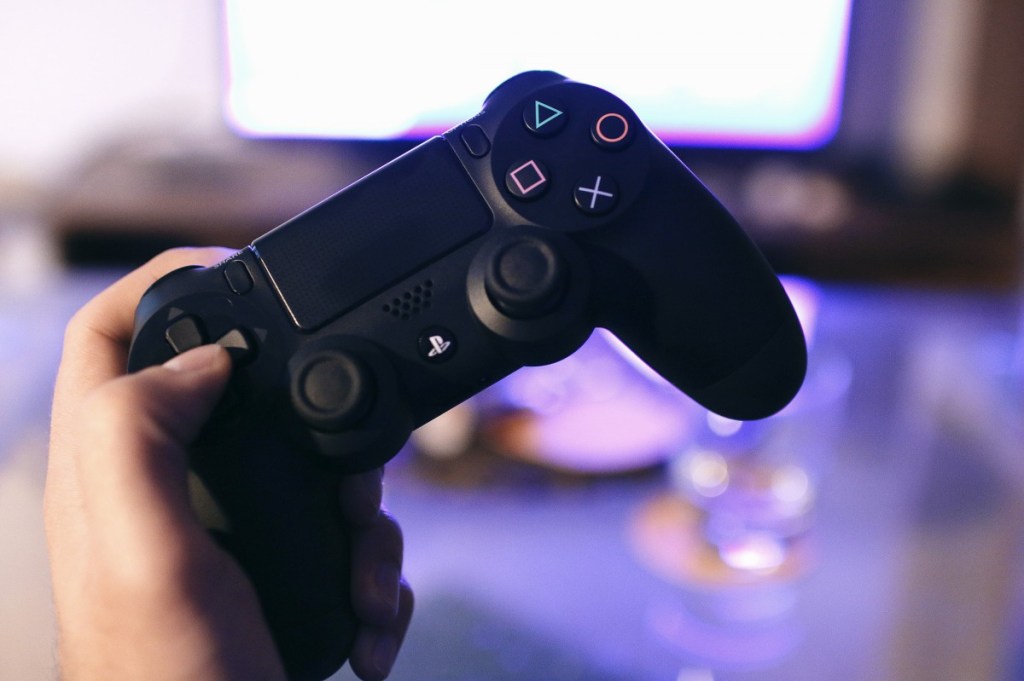
You know that feeling of when you’re playing a game and you just wonder: “Man, can’t this be any faster?” Like in Minecraft, when you’re trying to get a book of mending from a villager, or in city builder games when you want to get a higher population. Or even when you’re playing an open world single-player game filled with collectibles. Don’t you just want to collect every single one of them before you face the next battle?
You know there’s no point to doing that. There’s a good chance that you will get a good enough item at some point by accident that will last you for the next few hours just fine. And once you need to upgrade, you probably already have another one that is perfectly capable.
And all through this, are you really having fun?
The idea of ‘Optimising the fun out of a game’ comes from Civilisation designer Soren Johnson, who went on to describe that ‘one of the responsibilities of designers is to protect the player from themselves‘ . What he means by this is fairly obvious: when given the option, players will choose what gets them closer to the ‘Game Over’ screen over what is actually fun.
This is true in almost all games, especially ones where the player is open to do whatever they want. Players will talk about the ‘meta-game’ of an item, a ‘quick hack’ to get a high level weapon faster. Speed running is the pinnacle of this, completing a game as fast as possible for basically no reward other than bragging rights.
Even in comforting games that almost beg you to relax there is this level of need for optimisation. Stardew Valley is a great ex ample of this. It is a very peaceful game which encourages you to spend time in your farm, explore what you want, talk to interesting residents of the valley, and fight strange monsters. But even then, players will optimise getting the sprinklers as fast as possible, or getting to the bottom of the mine for the best resources, or whatever they can to make sure they ‘win’ it.
I’m not going to act like I’m better than this either. I’ve recently been replaying Assassins Creed: II and I’m going around collecting all the chests I can before progressing. I’ve done the same thing in Stardew Valley, checking the wiki for best ways to progress. Even in Minecraft I’ve fallen for the trap of wanting monster farms instead of just finding creatures naturally.
All of these things are fine and I don’t feel bad for doing them. And yet I can’t help but shake the feeling that I’m just wasting my time for nothing. So why do we do this? I have some ideas as to why, though they are only my opinion.
For one, almost all of the games I have mentioned have an uneven progression involved in them. In short if I only follow the main story and some side missions, I may not have the best items in the game and wouldn’t have as good of a time. In a way, I’m preparing for something that could happen even if it doesn’t. If I want to have the full experience then, I need to get all the collectibles.
There is also the completionist mindset. I have to get all the collectibles to have really finished this game. If I don’t do that, then did I really play this game? And that also doesn’t account for when these completionist ideas come up again in the story. Without spoiling too much, in Assassins Creed: II there is an item that you need to collect all of before you can finish the main quest. When I first played the game I only ever collected them when they were convenient or nearby. Now, though, I know to look out for them. I don’t want to spend all that time grinding for the next level now, do I? That would be boring! And yet, I’m doing it now by getting all of them before I continue. I’m just wasting time doing something I don’t have to do before I continue.
I think the above point is the main reason we do these things. When we buy a game, we want that full experience. We don’t want to leave anything unturned, or miss anything that could help us in the long run. Imagine how easy a boss would be if we have the best item in the game before we face them? Imagine the cool thing you could find if you just spend a little longer away from the main story? Imagine having a thing that makes traversal that slight bit better?
All of these things are nice, but they aren’t helpful to us. We’re just spending time away from the story or desired experience of the developers. We aren’t taking risks, we’re mitigating them.
So what can we do, and what can designers do? To be honest, there’s not much we can do. After decades of game design and player expectation, there’s little that we can do to fix this. There’s also the issue of in game monetisation, requiring players who don’t want to pay real money to get somewhere faster to endlessly grind. Remember, Assassin’s Creed: Valhalla, despite being a bad game, is the highest earning entry in the franchise, mostly due to the season passes and DLC, but also due to micro transactions. We want more stories, but we also want instant rewards.
However, there are ways we can fix this. For one, games need to be designed so that getting collectibles isn’t just ticking off a to-do list. It needs to be something that we can get either story or fun game play moments out of exploring. They can do this by making items cheaper so you don’t have to have so much in-game currency to buy them, or having fewer items to make the ones you do get all the more rewarding.
Designers can also make the side content completely unrelated to the stories progression. Games developed by Rockstar do this very well. Their interactive open worlds are so details that you can just avoid the main story for many parts of the game when you choose to. Red Dead Redemption II, for example, has such great hunting mechanics that it can almost become it’s own game. And as all the items you get from hunting don’t actually impact if you can or can’t complete the game, then it makes it all the more rewarding by itself.
Of course, there is also the things us players can do to improve. We can try and avoid collecting all the things we don’t actually need. Turn off all non-essential parts of the map and explore organically. Avoid the distractions offered to us. They aren’t needed. We can manage without.
Overall, optimising the fun out of games is likely a symptom of bigger problems in the game itself. We can avoid them, but when they are baked into the game itself it can be hard to do that. We have to accept that some parts of the game need a level of monotony. So as long as that part is fun instead of a grind, then the game is fine.
Please note that all ideas referenced in this article are mostly speculation and should not be used as a reference point in any academic context. These are my thoughts on a subject and may not be accurate.
References:
- Prince, C. (2020). Annoyingly, Players Like To Optimize The Fun Out Of A Game. The Gamer. https://www.thegamer.com/players-optimize-fun-out-of-games/.
- Phillips, T. (2022). Assassin’s Creed Valhalla passes $1bn revenue. Eurogamer. https://www.eurogamer.net/assassins-creed-valhalla-passes-usd1bn-revenue.



 Cheesman Chronicles
Leave a comment